Recently a friend asked me to install the reverb from a new 2600 into his old one. Of course I scoffed at this idea but also recognized that it’s important to consider everyones preferences, even if I think the idea is crazy. His complaint was the original was very noisy, and that he just liked the way the new one’s reverb sounded and wanted “best of both worlds” so to speak.
The new Korg ARP 2600 uses a accutronics/belton tank that Korg sells on reverb apparently (and appropriately). There are plenty of other options available but I just so happened to have one in stock from years prior. Funny enough, I only had one in stock because we agreed to fix a new 2600 with a dead reverb tank and the tank took so long for Korg’s part supplier to send, we ended up finding the same tank with a different model number from the actual maker and got it much faster and completed the repair well before the official tank arrived. Once it arrived, on the shelf it went!
Maybe not interesting to you, but I found it interesting that the new tank has holes that align perfectly with the mounting of the original reverb tank. If your rubber gaskets are still in good shape, you can just mount it right in using the hardware you removed. In my case, because I am an idiot who occasionally gets ahead of himself, I already enlarged the holes and transferred the included rubber gaskets to those holes and had to change the screws to 6/32 (rather than 4/40) and use 5/16 drive nuts to mount it decently.
Electronically, you have to make some changes. For one, the new tank requires a ground on the input side and output side. The original only had a ground on the output side. I did this with a test clip at first to see how it sounded, but noticed there was an insane amount of oscillator bleed coming from the reverb circuit. I went over to the CMS website and saw that Phil offers a mod that reduces this by 30% or something. I put the old tank back and confirmed the same amount of bleed. Being a bit of a smart ass of course I figured this is likely something I can figure out on my own seeing as I get paid to do this for a living and I ended up being right. In this case at least, turns out the wiring loom for the reverb circuit probably shouldn’t be running in the same loom at the oscillator audio signals (among other signals). I removed the wiring from the loom completely and redid it with new RCA connectors and some shielded wire (I did not use any type of fancy hi fi wire, just some shielded balanced wire I had laying around). Once I did this and re ran the wires for the reverb in a isolated fashion (in respects to the other many signals) the oscillator bleed was indeed reduced by a lot. I highly recommend doing this.
On the actual electronics side, I had to change the value for R276 (220k) as part of the reverb driver circuit. I don’t remember what I did but I had to attenuate the signal a bit as it was distorting easily. I found a good sweet spot that allowed for drive if you really put too much signal into the reverb and also enough so that softer sounds weren’t too quiet heading into the reverb.
Overall the reverb does sound nice, and of course different than the original. It seems to have a longer tail.
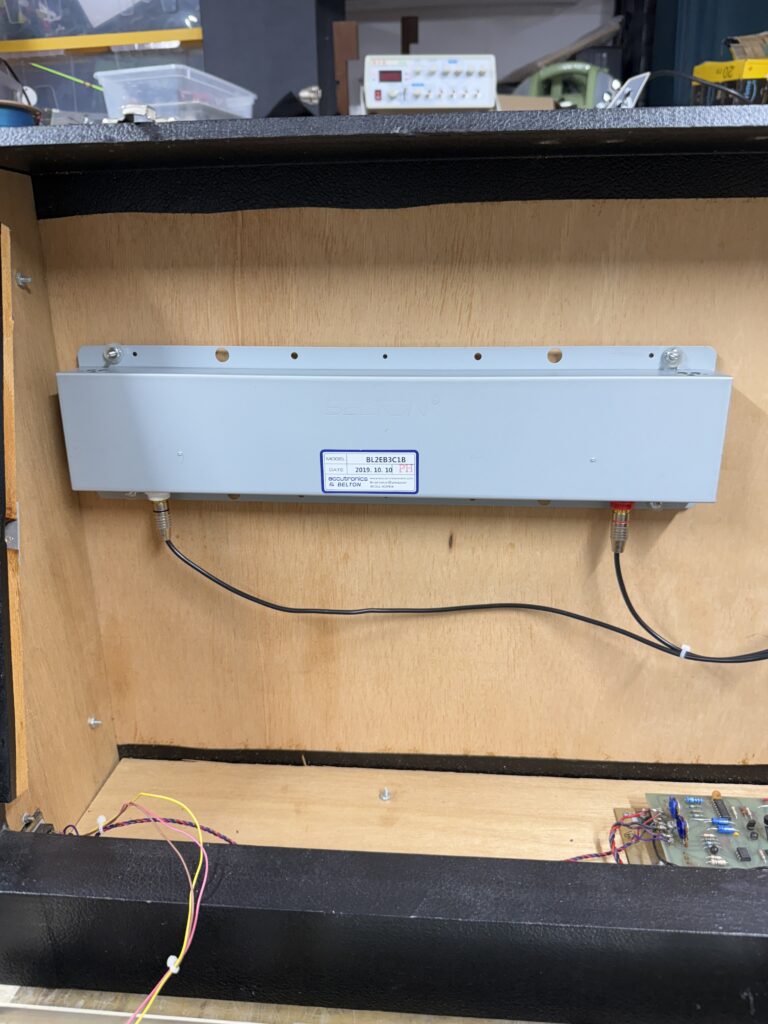
Above is the new tank mounted in the synth. Note the new cabling and connectors.
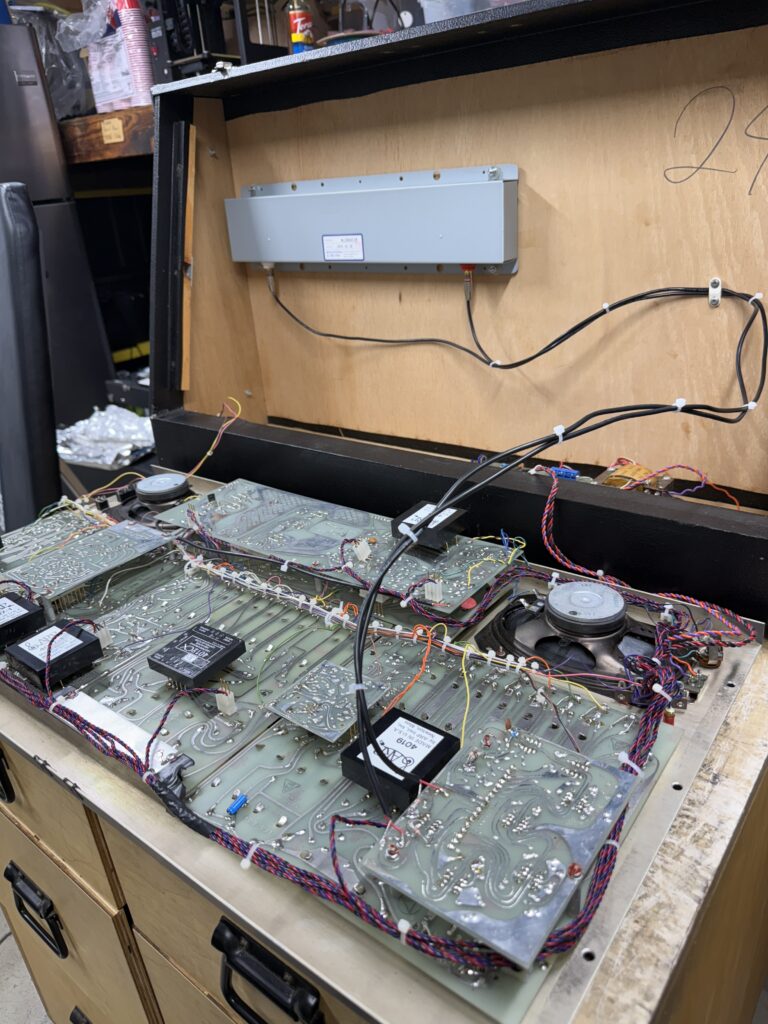
A bit of a wider shot of much of the same to show how the reverb cabling was re routed and affixed to the back of the console to allow for a service loop and easy time closing the unit and not allowing the wires to commingle too close to the PSU.
Should You Do This Mod To Yours?
And will Rosen Sound be offering this regularly? I think largely the answer is no. I don’t subscribe to the idea that a 2600 must have the long tank. I think the short tank sounds good too. I think if you really want to experiment with it, go right ahead and put the new tank in an old 2600. Obviously if your tank is damaged or missing, you gotta do something anyway. Keep in mind the new tank and old tank require different electronic requirements due to the coils being different. You should certainly have a tech do it. We wanted to retain the original reverb driver circuitry but I suppose your local genius could build a new one with some fancy IC’s. I’d never.